Friday, 30 March 2012

Early Spring in Cornwall

Once again this entry is an amalgamation of my Pendeen Birding blog entries.

Tuesday 27th March
It had been about a month since my last visit down to Cornwall and I was starting to get withdrawal symptoms which were being exacerbated by the wealth of good birds that had been turning up including several night herons, hoopoes and a blue-winged teal to name but a few. With the holiday season about to kick off properly and our cottage booked up for the whole of April I thought that I would nip down just to check up on the small building projects that had needed finishing off and to sort out a gardener to look after the outside.

It was going to be another flying visit, down on Tuesday, do stuff on Wednesday and return on Thursday so I wouldn't have a great deal of time whilst down there but I was hoping to sneak in at least a bit of birding en passant. As usual I looked around to see what was of interest en route but the only bird that I could find was a very elusive little bunting at South Milton. I spoke to a local about it who informed me that the bird was occasionally coming to a pile of seed put out under a tree but one could go many hours without seeing it so it was a bit hit and miss. Nevertheless, with nothing else picquing my interest I decided to have a go for the bunting on the way down.

I set off from Oxford at around 9am and with the roads being nice and clear I arrived in South Milton at around 12:30. There I found a couple of other birders who were also trying for the bunting and one of them informed me that it had in fact been seen by some others earlier on. I decided to give myself a time limit of two hours and dutifully kept watch over the seed pile as birds came and went. There was quite a variety with reed buntings, chaffinches, goldfinches, great and blue tits, robins and dunnocks all visiting the seeds. While we waited a Cetti's would call occasionally from deep within the nearby reeds. The others gave up after a while but I dutifully stuck it out for my allotted two hours but without success. Disappointed with my failure, I returned to the car and headed off for Cornwall.

Once on the Penwith peninsula I decided that I would take advantage of the extra daylight to go and check out Kenidjack to see if I could find the elusive Night Heron that had been lurking along the stream for a couple of weeks now. It was rather breezy though very sunny as I made my way down the valley. I soon discovered that the big problem with trying to see this bird was the fact that it was often impossible to see the stream as it twitsted and turned down the valley and there were large sections that were invisible from the main path. After some exploration I managed to discover various other paths on the other side of the valley and by working my way along them I was able to cover more sections of the stream. However after a good hour and a half of searching I failed to come up with the bird at all. A grey heron was flapping around for a while but nothing more exciting than that. Disappointed with another failure I decided to head home and to boot up the cottage.

A great tit, taken at Kenidjack


At least I got to explore the many tracks surrounding the
stream. This is from the Mill Pond looking back towards the chimney ruin

To add to what was turning out to be a rather bad day, I arrived at the cottage to find that there wasn't any electricity. Readers may recall that this wasn't the first time that I'd turned up to find that something wasn't working: last time it had been the central heating. After some phone calls I'd ascertained that the neighbours seemed to have power so it must be a problem at my end and as the meter was completely blank power wasn't getting inside at all. I called the power distrubution company who said that they'd send someone down some time in the next four hours(!). Fortunately he came in about an hour and a half where he quickly spotted that the problem was a loose wire on the telegraph pole. However he couldn't deal with it himself and would have to call the "overhead team" who themselves would come some time in the next four hours apparently. I passed the time reading by torchlight and at around 11pm the overhead team turned up and fortunately were able to sort things out within about 20 minutes. After that I was finally able to cook a hot meal and relax a bit before going to bed. All in all it had been a rather frustrating and unsuccessful day. The only positive that I could take from it all was to be thankful that it had been me that had discovered the power outage rather than our first guests on Saturday.

Wednesday 28th March
Today I had a number of tasks to do including cutting the grass in the garden and also interviewing a few gardeners so that someone else could tend to the grass going forward. With the gardeners due to arrive at around midday I decided that I would nip out first thing and then get on with my various chores on my return. There had been nothing of particular note reported yesterday to tempt me elsewhere so, despite my lack of success previously, I decided to have another go at Kenidjack for the Night Heron.

This morning the wind had dropped away and it was an absolutely gorgeous spring day as I made my way down the valley. There was plenty of bird activity and chiffchaffs were singing everywhere. From my visit yesterday I knew where to look and methodically started to work my way down the valley. About half way down I got an RBA text reporting the Night Heron between the chimney ruin and the donkey paddock. I immediately made my way there and worked my way along this rather small stretch. Needless to say there was no sign of the bird but as the path was rather close to the stream I assumed that the reporter must have flushed the bird in the process of finding it. All this meant that I was none the wiser and would still have to re-find it for myself. I was just working my way down the South side of the valley just below the Mill Pond when I flushed something from the small clump of trees in the stream just below the Pond. It flew a short distance into the trees directly underneath the Pond and during this flight I was able to get a good view of it. It was a small heron but rather than being the smart plumage of an adult Night Heron instead it was a rather grubby and streaky brown all over (without any wing patches) - a first summer Night Heron which had therefore to be a different bird from the adult! I tried to re-find it in the clump of trees into which I'd seen it fly but despite viewing from all angles on both sides of the stream I couldn't get a sight of it. As I made my way back to the car I bumped into Hiliary and Phil, fellow regular visitors to Cornwall whom I'd met previously. They were looking for the Night Heron and apparently had tried without success several times previously. I told them of my find and made my way back to the car. After that I had to nip into Penzance for some minor shopping and then get back to the cottage before the first gardener arrived.

Singing dunnock

The next few hours were spent chatting to gardeners, strimming the small patch of grass outside the house and doing various minor chores. Periodically I would spot a warbler flitting about in the tamerisk in the garden. Usually they were chiffies but on one occasion a singing willow warbler nearby prompted me to go and find it - my first of the year. The second gardener never even bothered to turn up so in the end I gave up and decided to head out for an afternoon birding session. The first item on the list was the small matter of a little ringed plover which had been reported at Marazion Marsh late morning. Now back in Oxon, LRP's are pretty common but down in Cornwall they're mainly only seen on return passage and then only in small numbers so this was a bird that I still needed for my fledgling Cornish list. I arrived at about the same time as Richard Menari who soon picked the bird out right in front of the viewing area by the main road. We both took a few distant photos and whilst chatting Richard informed me of a couple of hoopoes at the Brew Pool which had not been reported on RBA. I'd been thinking of heading over to the Lizard to try and catch up with this species but these were much closer and there were two of them so I decided to try for them instead.

Little Ringed Plover - not so common in Cornwall

I'd only been to the Brew Pool once before when Luke, my five year old, had been a baby when I'd pushed him down the track in his all terrain buggy so it was a nice chance to get to know the area a bit better. I parked near the First and Last Inn and took the path towards the Pool, stopping to check all the likely fields on the way. At the Pool I bumped into Brian Field who'd been watching one of the birds just a few minutes before I arrived but had just lost track of it. After a while we managed to refind it inside the sewerage works, working it's way along the short grass along the fence. I took a few record shots though they were largely into the sun and also partially through the fence. Whilst watching the bird we got chatting and it turned out that both of our wives were artists. He was telling me about the gallery in St. Ives that his wife was working at and also how much they enjoyed living in Cornwall, having moved down about four and a half years ago. As this is a topic that my VLW and I discuss from time to time I was keen to hear how he'd found it: they both had no regrets on this front. After chatting about the Cornish birding scene for a while we parted company. I made my way contentedly back to the cottage in order to get on with my remaining chores. After the disappointment of yesterday it had been a highly successful day with what was technically a self-found Night Heron topping the bill.


Brew Pool Hoopoe

Thursday 29th March
This morning I was due to head back home but naturally I thought that I would stop off en route for some birding in various places. After packing everything away and making sure that the cottage was spick and span I headed off at around 9 a.m. The plan was to see if I could add a few more ticks to my Cornish list and I had three species in three different locations in mind for this.

My first port of call was a location that I'm not going to name looking for Dartford Warblers. I'd been told by John Swann that early spring before the Whitethroats have arrived is the best time to find them to avoid confusion over the song. It was an absolutely perfect spring morning with hardly a breath of wind as I parked up and within about five minutes of walking I could clearly hear a couple of males singing away at each other. I soon spotted one of them singing its heart out on top of a gorse bush, looking resplendent in the spring sunshine. As sightings of this species are often rather fleeting I enjoyed getting such good long views.

As I had a busy schedule and had achieved my target I didn't hang around but instead went on to Rosewall Hill (or Buttermilk Hill as it is often know locally) to look for my second target species, namely Ring Ouzel. The hill is a know hot spot for them on migration but I know from experience that they can be quite skulky little so and so's. It only took a few minutes to get to the summit and from there I carefully scanned in all directions but the only bird that I could come up with was a single Wheatear working its way along the East slope. As I was coming back down again I met up with Viv Stratton, who works the hills as his patch, visiting twice a day to walk his energetic dog. He gave me some tips on where to see Ring Ouzels for next time and told me a bit about the birds that he typically gets there which was most informative.

My final destination was Walmsley Sanctuary near Wadebridge for the long-staying female Blue-winged Teal. I'd heard that it was a rather elusive bird and could remain hidden for long periods of time but I wasn't going to be able to hang around for too long as I had a long drive back to Oxford ahead of me. I arrived there at around midday and mentally gave myself my usual two hour time limit as I walked towards the Tower Hide. Fortunately I entered the hide to find that the bird was actually on show making a dash across the channel to the shelter of the reeds on the other side. Having achieved my target so quickly I decided that I would only wait a relatively short period to see if it would show again for me to take some photos. In the mean time there were half a dozen black-tailed godwits, three ruff and the usual assortment of ducks, geese and gulls to look through. I mentally gave the teal until 1pm and sure enough at exactly this time it broke cover again, working its way partially hidden along the reeds before making another dash across the channel for the safety of the other side. I managed some rather shoddy video footage of it as it skulked but managed to miss it completely when it broke cover. Pleased with having seen it a couple of times relatively easily (one chap there had waited over two and a half hours to get a glimpse of it that morning) I went back to the car and headed for home, arriving back late afternoon, tired but very pleased with having obtained another couple of Cornish ticks today.

One of the three ruff on the side scrape

A rather poor videograb of the bird but at least you can
see the pale patch at the base of the bill


...and the dodgy video in full

Retrospective
So I'm back home already after what was a very brief visit to my favourite part of the country. The weather back here in Oxford has finally broken and it's now cloudy and distinctly chilly and it seems a world away from the wonderful sunshine of far west Cornwall. Before I'd set off I'd not exactly been looking forward to the trip: doing it all in three days makes for a lot of tiring driving and I was worried that if the birding wasn't that good then I would feel distinctly disappointed with having made all that effort for no reward. The lack of success on the first day only seemed to confirm these fears but fortunately from then on it all turned around and I managed to add five species to my Cornish list: a self-found new Night Heron at Kenidjack started it all off, then a Little Ringed Plover at Marazion and a wonderful Hoopoe at the Brew Pool. The next day's Cornish ticks were Dartford Warbler and the Walmsley Blue-winged Teal. I'm pleased to announce that with these fives ticks I have now managed to overtake my Oxon county list total with my Cornish one. Those of you who know my paltry Oxon total won't be overly impressed with this but I'm pleased to have racked up a modest Cornish total relatively quickly. Considering the slow rate at which my Oxon total is added to I don't imagine that it will ever catch up with the Cornish total again

I leave you with a moth du jour photo. With there being hardly any wind I did leave the "moth light" on outside one evening and quickly attracted a couple of these chaps. My method of mothing is rather primitive: I leave the outside light on and then catch any that I find in a wine glass before taking them inside for photographing. I've finally got around to getting a moth ID book of my own: "Concise Guide to the Moths of Great Britain and Ireland" by Townsend & Waring, illustrated by Richard Lewington. Therefore instead of simply sending my moth photos to John Swann for identification I thought that I'd have a go myself. This moth was very striking in that it held its wings closed like a butterfly so I'm pretty confident in identifying it as an Early Thorn though if anyone knows any better then please do write a comment below.

Thursday, 15 March 2012

Cormorants, Jizz & a Shag

My apologies to people who have stumbled on this article having Googled some of the words in the title if this is not quite the racy stuff they were looking for. For the rest of you, rather than being a trip report, this article is an amalgamation of various snippets and thoughts about my birding.

Cormorants
Firstly, I thought that I would just follow up on my previous entry about cormorant sub-species in the county. After I'd posted the blog I spoke with Ian Lewington, our much-esteemed county recorder, about cormorants and he explained that actually sinensis are the commoner sub-species in the county now. Carbo is often found in the county, especially at winter on places such as Farmoor. However carbo is a cliff nesting sub-species and so isn't generally to be found in spring and summer. On the other hand the continental sinensis are tree nesting birds and our resident population of cormorants at Dix pit for example are all sinensis. He also explained that when using the gular pouch identification method one has to be careful as the perceived angle that it makes (see previous posting) depends on how its head is positioned and really to get an accurate measure one should observe the bird for a while, almost taking the average angle if you will. All interesting stuff.

Jizz
Now, I still very much consider myself a learner when it comes to birding. I've been at it for four and a half years now and whilst I feel that I've grasped the basics I know that I still have a lot to learn. I also appreciate how there's no substitute for experience when it comes to birding and actually seeing birds and observing them careful gives you more more of an edge in identification than merely looking things up in a text book. Indeed one of the most satisfying aspects of birding for me is learning and improving my identification skills. I've gone on about gulls in the past a why I enjoy them so much because they're such a challenge and I feel that I've really made some good progress there despite a couple of howlers this gulling season regarding my mis-identification of Caspian gulls. I've always felt very strongly that it's through making errors that I am forced to look more closely at where I've gone wrong and thus my errors are usually the greatest spur to further learning and improvement. There are times however when I am pleasantly reminded at just how far I've come in my birding so far, in particular with regards to the nebulous things that is jizz. I managed to find a nice red-head red-breasted merganser on my local patch of Port Meadow a while ago. Now these are nice birds but only subtly different from red-head goosander but I was pleased to say that as soon as I saw it, it rang alarm bells as it just didn't look like a goosander: it looked skinny and the bill was much more slender and has a feeling of upcurve to it rather than the more solid down-hooked beak of a goosander. I was able to point out the bird to a relative newcomer to county birding who needed it for his county list and it was interesting to see just how hard he found it to pick the bird out. It just shows how far I've come already.

The Port Meadow red-breasted merganser

Jizz and a Shag
Now this inner feeling for jizz showed itself again the other day whilst I was again on the Meadow. I spotted a low flying bird heading rapidly southwards over the floods. It was low and quite close so I got a good view of it as it sped past. Whilst it was clearly an all-black cormorant-type of bird, my inner alarm bells immediately went off because it just wasn't the right shape or proportions at all for a cormorant which I've often seen flying over the Meadow. Instead it was small with a really strikingly skinny neck (not the thick chunky thing of a cormorant) and the wings were shorter. I watched it for several minutes until it became a speck in the distance but for those first few seconds it had just felt completely wrong for a cormorant so despite the fact that it was a flyover that I only really saw well for a few seconds I knew that it had to have been a shag that I'd seen. Not a great rarity of course but a nice bird for the county which is more or less annual but as far as I knew it was a first for the Meadow. Now whether anyone else believes me is another matter - I've made some dodgy ID claims in the past (e.g. honey buzzard over my house which I later retracted) as well as plenty of gull ID errors and I know that if some other birder reported a single-observer fly-over shag on the Meadow then (depending on who it was) I could be more than a tad sceptical. However I strongly believe that at the end of the day birding is a very personal journey of improvement and enjoyment and ultimately that's what matters so it's down on my Patch List and I'm pleased that my inner jizz radar is able to flag things up like that.

Shag

As the gull season is about over now I have been thinking of writing up the fruits of my learning from this one, especially with regards to the identification of the larger gulls. Gavin Haig at Not Quite Scilly is doing an excellent series on Caspian gull identification, starting with first winters so I was thinking of starting at the other end with adults. Partly I want to do this so that at the start of the next season this autumn, I'm able to get up to speed more quickly but also I know that even some very experience local birders find gulls tricky so it may be of use to others as well. Anyway, you've been warned that another gull post is coming though I'll spare you the excitement just yet.

I'll whet your appetite with this bird for you to ponder over.
You can read daily patch updates including
gull reports at Port Meadow Birding
.

Wednesday, 7 March 2012

Sub-species Interest

When there's not a lot going on locally on the birding front one naturally tries to find interest where one can and this is where sub-species can come in. In fact I think that there is a strong case for counting sub-species on one's various lists. After all, since listing is ultimately completely pointless and a totally personal thing then why not county everything that you can identify? Of course if you are going to want to compare lists with others then you need a set of rules but since I have no interest in that at all I'm considering converting to a "all sub-species" list. Think about it: American black tern, Azorean yellow-legged gull, blue-headed wagtail, channel wagtail, Taiga & Tundra bean geese, pale and dark-bellied brent, black brant, suddenly there's a whole lot more stuff to go for. Gradually many of these birds are being granted full species status anyway but if you're just listing for yourself then there's nothing to stop you taking the plunge early and converting to the "anything goes" listing approach! At the very least I keep note of the various sub-species that I've seen though they're not (yet) on my headline life list tally.

Anyway, I was reading Gavin Haig's excellent blog "Not Quite Scilly" and he was going on about how to identify sinensis (Continental) cormorants. Whilst I have periodically read about people picking out these birds I had only the vaguest of ideas what the diagnostic criteria were so it was most useful to have it explained. For those who don't know it's to do with the angle that is made by the gular pouch, the (often yellowish) area at the base of the bill.


A helpful diagram copied second-hand from Newson et al.
"Subspecific differentiation and distribution of
Great Cormorants Phalacrocorax carbo
in Europe". Ardea 92(1): 3-10.


Now cormorant is not a bird that I photograph very often - let's face it they're just not that attractive but having learnt a new bit of bird ID I searched around for something to try it on and remembered a photo that I'd taken and blogged a few weeks ago of a cormorant in a side stream on my local patch at Port Meadow. Here it is again for those who missed it.

The Port Meadow bird (click to enlarge).
There's no arguing about the gular
patch angle here, clearly a sinensis

Here's a photo that I borrowed from Gavin's blog (c) Gavin Haig.
Note the much more acute angle of the gular pouch
so it's a home-grown carbo.

Result! Clearly a sinensis cormorant on the local patch. Now, I don't think that they're that rare in Oxon but I wondering whether anyone has bothered to take a look through county cormorants to see how many of them there are. Perhaps no one actually cares but it gives one something to check on even the commonest and arguably one of the least attractive of birds. Whilst waiting for the next good bird, having something to check on common species is not something to turn one's nose up at.

Talking of sub-species I'd just like to slip a cheeky gull into this post. I spotted it at the weekend whilst on a brief walk with my five year old son in tow so it was bins only and I'd get grief from Luke if I stopped for too long. I managed to snatch a photo of this fine intermedius lesser black-backed gull, which is basically the Scandinavian equivalent of our home-grown graellsii. Of course the much more sought after LBbG sub-species is the fuscus or Baltic gull which lives further east and is almost black with a ridiculously long primary projection.

Nice intermedius. Note the much darker colour mantle colour.

...and here's a reminder of the Appleford fuscus Baltic gull
(Ian Lewington certified) from October 2009 that I
was lucky enough to jam in on whilst not seeing the
Azorean gull. Note the unfeasibly long primary
projection and the almost black mantle colour.

So there you have it, sub-species offer you something of interest to do whilst waiting for the next good bird. Clearly my nerdiness knows no limits and I think that I can hear my VLW weeping quietly into her tea in the kitchen.

Addendum
It turns out (thanks to Ian Lewington) than in Oxon sinensis is now the common cormorant, having mostly replaced the carbo's. That's fired me up to go and try to find a local carbo for myself. See how interesting sub-species can be!

Tuesday, 28 February 2012

Rhiwderin Yellowthroat

I've been eyeing the reports of the common yellowthroat at Rhiwderin, near Newport with some interest for a while. The reason is that it looked a likely candidate for a Gnome twitch: it was within my self-imposed two hour travel cut-off, it had been around for a while and was being seen each day and the crowds would have died down a fair bit by now. However, as I'd been away in Cornwall a couple of weeks ago I felt that I needed to put in a solid week's work last week before taking a day off so soon after my holiday so it wasn't until this week that I decided to have a crack at it. What's more I'd bumped into Tom "the Wickster" Wickens at Port Meadow last week and he was interested in seeing the bird too, so on Tuesday morning I picked him up from Oxford station at 6:15 and we headed off in the Volvo towards Wales.

As we sped along the M4 we discussed the prospects for the twitch. Having done some research on the bird, it seemed that it could be very elusive at times and a posting on Bird Forum said how it had only been seen for a few seconds by a few individuals the previous day. Both Tom and I were thinking that it could be a rather long and frustrating twitch, staring at unmoving bushes for long periods of time (which neither he nor I are particularly fond of). We therefore mentally steeled ourselves for what could ultimately prove to be a long and frustrating day.

We arrived at Rhiwderin a couple of hours later at around 8:15 at the same time as a number of other birders. As we walked out to the field we could see a posse of about a eight or so birders all gathered in a rather promising small group in one place though when we got to them it turned out that this was merely because it was where the bird had been seen the previous day. Neither Tom nor I could quite understand this mentality and decided to do a tour of the surrounding hedges rather than standing in one spot just because everyone else was. We'd just done the entire length of the other side of the hedge and were looking at the dung heap back by the stile when I noticed that the twitcher contingent had moved and seemed to be looking intently into the bushes higher up the field. We hot-footed it back up the hill to find that the bird was about, creeping through the brambles along the ground and offering intermittent glimpses as it did so. A few second later and it was briefly completely out in the open within ten yards distance in all its Nearctic glory before it flitted off into the undergrowth again.

Assembled twitchers

Not the yellowthroat which was so skulking that I didn't even
attempt to photograph it. However, there were quite a few
other birds around in the hedgerow including this treecreeper,
lots of siskins and a nuthatch and crossbill were heard as well.


This is what all the fuss was about. Unfortunately this fabulous
photo wasn't taken by me but instead by (c) Chris Thomas
(see his great web-site:
British Bird Photography)

After a while of it not showing again some people, including myself and Tom, spread out a bit further to see if we could pick it up again further along the hedge. A short while after that I managed to spot it at the back of the hedge where it gave occasional glimpses for a while before disappearing once again. After that it showed again a couple more times so after about two hours we'd seen it on four separate occasions. By now the hunger of ourselves and the rest of the crowd for sightings was starting to diminish and people were starting to stand around chatting a bit more rather than looking intently for the bird. New people were starting to arrive, no doubt keen to see the bird though they were going to have to contend with a less helpful crowd to aid them in seeing it. Tom and I decided that we were happy with our views and elected to head off.

Having done my research I suggested to Tom that if he didn't mind I would quite like to nip over to the Blorenge (the site of the famous Marmora's warbler) on the way home to see if we could rustle up some red grouse. One of the largest gaping holes in my fledgling life list are the Scottish birds and certain game birds (grouse & exotic pheasants) and embarrassingly I still needed red grouse. To be more exact, I think that I still needed it as I may have seen one as a boy before my "wilderness years" when I stopped birding but to be honest I just couldn't remember. Anyway, I'd read on Bird Forum that the Blorenge was a good site for them and as it was on the way home if going via the A40 I thought that I would give it a punt if Tom were game. He was happy to have a go so some half an hour later we pitched up at the Foxhunters car park by the radio mast only to discover that the entire mountain top was covered in a rather thick fog. This didn't look at all promising but we thought that we might as well give it a quick go seeing as we were there and at least we would get a bit of a walk before the long drive back home. Accordingly we yomped off into the foggy heather.

Foggy Blorenge - not looking good for grouse hunting

After a while Tom managed to spot what he was sure were grouse droppings (which look like little cylinders the same as goose does). Well, at least now I'd seen something grouse related though I wasn't so Packham-esque as to take a sample home with me. We walked down the path a bit more before deciding to go "off piste" and we started to walk across the heather. After a while we began to worry that we might get a bit lost in the fog but as we stopped to get our bearings we heard the distinct sound of a distant grouse calling. Well, at least I could now put it on my year list (which allows for "heard only") though not my life list which requires an actual sighting. We headed towards the sound but to no avail. After a while we started to head back towards the car when suddenly Tom picked out a couple of grouse in flight which I managed to see through the gloom. Result - and under these conditions quite an achievement! Now all we had to do was to get back to the car. We had a discussion and both agreed on what felt like the right way back and headed off, sure enough shortly finding a path which took us safely back to where we'd parked.

The Wickster seemed to be worryingly attractive to the local sheep

Flushed with success we headed back down the A40 towards Oxford where Tom decided to do some more work on his county year list and I chose to go home to enjoy a well-deserved cup of tea and to bask in the warm glow of a successful morning's birding.

I leave you with this absolutely stunning photo
taken by (c) Richard Stonier (see his wonderful
web-site)

Thursday, 23 February 2012

Cornwall in February Again

Yet another trip down to Cornwall, once more an accumulation of the various Pendeen Birding posts that I made. Be warned, not a lot actually happens on this trip though that doesn't stop me writing about it in some detail!

Monday 13th February
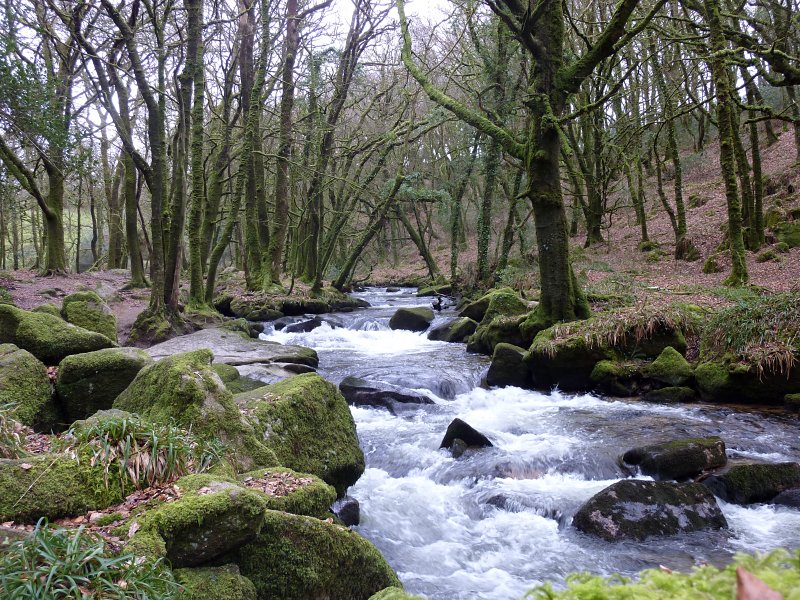
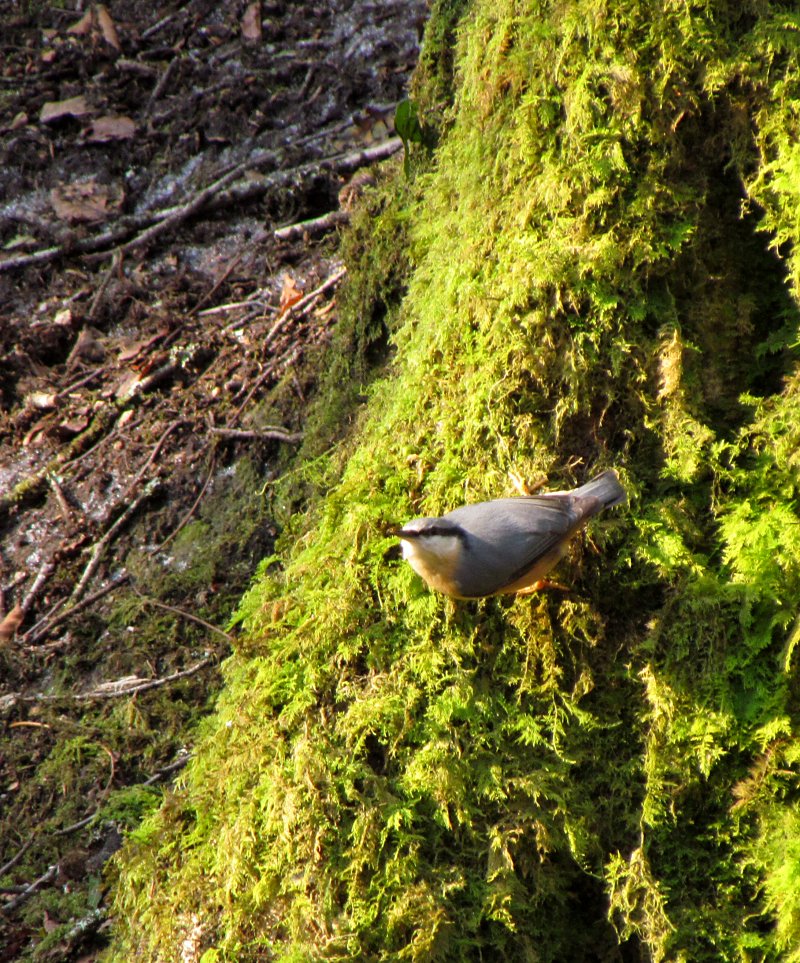
As I mentioned in previous posts we were coming back down en famille for the half term break. With all the rest of the family about (bar daughter number 1 who wanted to stay at home because she had some gigs to go to and some work to do) I fear that there won't be many birding opportunities but with things rather quiet in the county at present this probably won't be too gripping. En route Beth (daughter number 2) had requested that we stopped off at Golitha Falls which she really likes. As I still need marsh tit for the county list I was only too happy to oblige and my VLW and our son, Luke, hadn't been there before and were interested to see it too. Unfortunately the weather was rather overcast and breezy though mercifully at least the very cold temperatures had finished. We had a little wander about though the breeze meant that birds were hard to see. I managed a couple of screeching jays, a distant calling greater spotted woodpecker and a couple of nuthatches but not much else.

My VLW is an artist and so I spend a fair bit of time
when out in the field taking photos of likely subjects for
her pictures. Here's the bridge by Golitha Falls


I persuaded the family that they should have their hot chocolate break from our thermos a few minutes up the A30 at Temple whilst I had a quick look around for the reported great grey shrike there. The terrain didn't didn't strike me as ideally "shrikey" and there was no sign of it in the ten minutes that I had of looking. After that it was back along the A30 to Penzance where we stopped off for provisions and then on the cottage. There we discovered that the central heating had stopped working for some reason. We called up our builder who sent out his plumber to take a look despite the late hour. He diagnosed that the oil pump had gone but that he should be able to get a replacement tomorrow. Still it meant a very chilly night in the cottage which, due to its exposed location, can get very cold inside without any heating. We all slept fully clothed and were glad of the extra blankets on top of our duvets. Fingers were strongly crossed that they would be able to sort things out the next day.

The river Fowey at Golitha - another potential picture subject

Tuesday 14th February
Without the central heating we were glad to get out of the house and into comparative warmth of the car. We decided that we needed some pampering after our cold ordeal and headed to some shops just outside Hayle where there was a warm café. I negotiated half an hour at the Hayle estuary whilst the rest of them did a spot of shopping and I arranged to meet them in the cafe for a nice hot lunch. At the estuary the location of the gull flock meant that viewing from the Lelant Saltings platform was optimal so I headed over there where I met a local birder called Jean (from St. Buryan) whom I met previously whilst hunting for cranes on the Lizard. We scanned the birds together where we found 7 common gulls (6 adults and a first winter), a flock of 7 sanderling, a rather out of place kittiwake, a few bar-tailed godwits and one very distant godwit that looked like a black-tailed godwit though I couldn't be certain. There was no sign of any white-winged gulls nor any yellow-legged gulls, both of which had been reported there recently. My time was soon up and I went off to join the rest of the family for a well-earned hot meal.

After lunch we decided to explore somewhere we'd not been before so headed off to Porthlevan. Not much to report there on the bird front apart from the usual rock pipits, herring gulls, oystercatchers and a couple of mute swans and a mongrel duck in the harbour. There was one distant diver off the harbour mouth, probably a great-northern though I only had my bins and the family wouldn't let me linger to scrutinise it for long enough to be certain.

Porthlevan harbour - not quite in the same league as
Mousehole as far as pictoresqueness is concerned.


En route to Porthlevan we'd passed the Helston boating lake and Luke had been sharp enough to spot a playground there so we'd promised him that we'd stop off there on the way back. Beth took Luke off to the playground whilst I nipped in at the sewage works and my VLW had a nap in the car. The sewage works still held plenty of chiffies (I estimate about a dozen) including the presumed tristis bird though once again it didn't call. In addition there was a meadow pipit and the grey wagtail still. Over at the boating lake I revelled in the nice close views of the gulls though there was nothing of particular note on the larid front. There appeared to be some displaced ducks though with 20 or so tufted ducks, 4 shovelers and a single drake pochard that was ridiculously tame, coming right up to anyone who looked remotely like they might have some bread.

The tame pochard. If this had been a redhead or
canvasback, it would have failed the "bread test" totally.


After that it was a spot of shopping and tea in Penzance and home to find that the heating had been fixed and the cottage was lovely and warm - horray!

Wednesday 15th February
This morning we decided to spend some time doing the few cottage chores that we needed to do whilst we were down here: hanging up some pictures, adding some more curtain rings to the curtains and things like that. Also one of the builders was here doing some of the weather-proofing jobs that had been identified from the "great storm" so we had to discuss certain details about the work.

After lunch we headed into Penzance to pick up a few bits and pieces with my VLW and B hitting the shops whilst L and I went to see if the Pirate Gift Shop at Penzance harbour was open. L always likes to visit a gift shop when he's down here so that we can buy him some piece of tat but unfortunately for him it was closed. While we waited for the others to return he amused himself with taking photos on my point and shoot camera whilst I scanned the Bay from Jubilee Pool. Whilst doing this I met with a young visting birder who it turned out was hoping to get in to Oxford University next year and wanted to know all about the best Oxford birding spots. I hope that he gets in as he was keen to visit Port Meadow (my patch) and I'm always keen to have extra pairs of eyes on the lookout for something good there. Whilst chatting we managed to turn up one Slav. grebe, one great northern diver and a couple of female eider duck but there was no sign of the surf scoter which had been reported earlier.

Once the rest of the family had arrived we headed off to Marazion to partake in that great British past time of sitting in the car looking at the sea with a hot drink from the thermos. Actually I stood outside the car scanning the sea though I couldn't turn up anything new. L said he wanted to go on the beach so I went with him for a quick look around whilst I tried to photograph the sanderling flock. Then it was back home to the cottage and some food.

This rock pipit came right up to the car at Marazion


The Marazion sanderling flock numbered
about 45 birds today (Click to enlarge)


A Marazion kestrel was hovering close by

Thursday 16th February
We're still very much in family holiday mode so birding has to be snatched whereever we happen to decide to visit. Today we chose to explore somewhere different for a change and as we know the Penwith peninsula pretty well we decided to go "up county" for this. I suggested to the rest of the family a visit to St. Clements near Truro for a walk along the river as I knew this area from previous visits. There were plenty of the usual curlew, redshank, teal and shelduck as well as 9 black-tailed godwits, at least 3 greenshank and a couple of spotted redshank. Unfortunately the recently-reported avocets were once again nowhere to be seen.

Waders on the Tresillian River at St. Clements

Next it was on to the Roseland peninsula, first to St. Mawes where there was not much to report apart from a large flock of gulls hanging around a fishing boat waiting for scraps to be tossed overboard. At Portscatho there were some waders to be found on the beach: 2 bar-tailed godwits, 2 ringed plover and a flock of about 40 dunlin. At the beach hut I got chatting to the lady there whom I'd seen on TV on "Cornwall with Caroline Quentin" - naturally I wasn't the first person to mention that I'd seen her and her husband on the telly.

Gulls at St. Mawes

Portscatho birds

To round off what had been a pleasant if somewhat low key day out, on the way back home at dusk a woodock flew low over the road between Newbridge and Pendeen.


Friday 17th February
Today once more the format was to do some light cottage chorage in the morning and then go on an outing in the afternoon. After a spot of sorting out a few damp patches I had to go on a shopping errand and I negotiated a brief scan of Mounts Bay as a reward. I chose Long Rock car park for my scan but there was little to see apart from a couple of great northern divers and a distant skua species (probably a pom or an arctic) that successfully chased after a gull until it gave up its lunch.

After a bit more work in the afternoon we decided to explore the Newlyn area a bit for our outing. As we set off from Pendeen along the North Road a snowy white gull flew low over the road in front of us and then flew along the road ahead of us for a while as we drove along before landing in a field alongside the road. From it's relatively small size and dainty proportions it was clearly an Iceland gull and without any grey in the wings it would have been a first or second winter, perhaps the Newlyn second winter bird.

Arriving at Newlyn, we parked up at the Tolcarne Inn and went in search of a cup of tea. This proved to be remarkably difficult as everywhere was closed though we eventually succeeded and took our drinks to the North Pier where we found a convenient bench. From this vantage point we surveyed the harbour looking at the boats and gulls though there was no sign of either the adult glaucous gull or the 2nd winter Iceland gull that had been frequenting the harbour for the last week or so. After a walk to the end of the pier and back we headed back to the car park where I met up with Graham Hobin and we scanned through the gulls together. Graham managed to spot what turned out to be a first winter glaucous gull on the rocks off Wherry Beach, perhaps the bird that had been around a couple of weeks ago in the harbour when I was last down. I couldn't hang around as the family was getting restless so we headed off back home but it had been good to score both white-wingers in one afternoon.


The 1st winter Glaucous Gull

Retrospective
I've been back in Oxford for a few days now and I realise that I've not yet done my trip retrospective. One of the main happenings during my time in Cornwall which I've not mentioned so far was the purchase of a new hat! Now, I'm not in any way, shape or form a hat person - they just don't suit me. The rest of my family can wear a hat and look good it in but I always look terrible in them - my VLW says it's because I have a small head. Nevertheless I enjoy the practical benefits of hat wearing. Especially when birding I like to have a cap which shades my eyes so I have been wearing a grubby cap for a couple of years now despite looking terrible in it. However on this holiday whilst mooching around M&S my VLW picked out a hat for me in which I look slightly less terrible than usual. What's more it's waterproof and has flaps to keep my ears warm so it's become my new birding hat. Whilst birding at Jubilee Pool I gave Luke the point & shoot camera to keep him occupied and he managed to take a photo of me sporting my new head gear which I thought I'd share with you.

Me in my new hat (taken by Luke aged 5).

Back to the birding where my trip away had been a very low key affair with not much about in the county and the fact that I was en famille meant that birding opportunities were rather limited. Looking back at my blog entries I managed a few half decent photos with the superzoom and it was nice to see both white-winged gulls in one day. I always enjoy rummaging through the chiffies at sewage works and it was nice to see the Helston tristis again. It was interesting to visit some new places and the Roseland peninsula is definitely worth another visit. I even managed a Cornish tick in the form of the woodcock that flew over the road as we were driving home at dusk. To summarise: nothing earth shattering and I'm not even going to pick a Bird of the Trip this time but it's always nice to be down in my favourite part of the country and there's always something to see.

I thought that I'd finish with this photo of a church
roof at the top of Market Jew Street by the car
park in Penzance. It's got these great fish scale
tiles which I've not come across before.

Tuesday, 7 February 2012

Cornwall in February

I'm running out of titles for my various Cornish trips so this one is just "Cornwall in February". As usual, this is a compilation of the various entries from Pendeen Birding.

Wednesday 1st February
I was due back down in Cornwall for a very brief interlude, chiefly just to drop off some final missing items and one piece of furniture (a blanket box in which to keep the spare house linen). Therefore I would only be down a few days though the whole family would be coming down again some time in the next couple of weeks for the February half term. With there being no birds of interest to stop off at en route I thought that I would take the opportunity to do some work on my fledgling Cornish list and also to get to know some more Cornish birding sites "up county". The plan was therefore to stop in at Golitha Falls again to see if I could catch up with treecreeper and also marsh tit, both of which I still needed. Whilst I was in the neighbourhood, it would be rude of me not to drop in at the lesser scaup at Drozmary and I also wanted to take a look at Colliford Lake. After that I thought that I would visit Treraven Meadows at Wadebridge and perhaps nip in to Chapel Amble for the glossy ibis.

Golitha Falls is a very beautiful spot

I left on time at a little before 9 a.m. and after a couple of minor stops (Homebase for some bits and bobs) and a fill-up of petrol I was soon on the road. The traffic was light and so I arrived without incident at Golitha Falls, my first stop, as I expected at around 12:30. I'd visited this beautiful location previously where I'd managed to see my first Cornish nuthatch but was back today to try for treecreeper and marsh tit. In the car park I met a local birder who'd seen a couple of treecreepers though he'd not seen any marsh tits that morning so I set off at least partially encouraged by this report. Of course, looking for small birds in woodland involves a lot of moving slowly, looking and listening and though it was sunny it was extremely cold and I found that the lack of movement didn't help with keeping warm. I managed to see at least three nuthatches, a few goldcrests and the usual tits, including a couple of coal tits and finally just as I was returning to the car park I found a treecreeper doing its thing on a tree right next to the path. So one out of two wasn't too bad for the first stop.


Golitha birds. Unfortunately, the tree creeper was in such a
gloomy part of the wood that the only shot that came out
was this one without it's head, so strictly record shot only


Next it was a quick stop in at Drozmary Pool which was back up the road towards the A30. I already had lesser scaup on my county list from the same location the previous year but this was reportedly a first winter drake and so couldn't have been the returning bird but I was still keen to get better views after the very distant and gloomy sighting of last time. I walked down the track to the pool and almost immediately found the bird remarkably close in and reasonably positioned with regards to the strong light so I had a go at digiscoping it. Unfortunately, though, it was diving actively and so I only had a few seconds between dives to try and get something. Given the cold, I didn't stay long but soon headed back to the A30. I decided to go via Colliford Lake just because I'd not visited it before but it was remarkably empty with just a cormorant, a crow and a couple of gulls for my trouble.


A couple of video snippets of the Drozmary scaup. At the time
of seeing it I was more concerned with trying to get some footage
than anything else but now that I've had a chance to review it I'm not
altogether convinced about the ID.


Next stop was Wadebridge to Treraven Meadows which was another site I'd not previously visited. It's a regular site for local birder Colin Selway and recently he'd unearthed an interesting pipit which after some deliberation he'd identified as a buff-bellied pipit. Sightings of this bird were rather irregular and I wasn't holding out much hope of seeing it but I thought that at least I'd get to know another Cornish site. It turned out to be a lovely flood Meadow filled with large numbers of muddy puddles and pools. I love this sort of habit as it's similar to my own beloved Port Meadow patch back home though that tends to have one large extended flood area rather than lots of small ones as this did. Although there was a small hide, the floods extended quite some way and couldn't all be viewed from the hide so in the end I worked my way along the path, scrutinising all the pools carefully as I went. The results of my labours were: 1 green sandpiper, 10 dunlin, 1 redshank and 1 shelduck on the river behind the floods, about 50 teal and 30 snipe, a couple of dozen canada geese, a few pied wagtails, a single grey wagtail, one curlew and a couple of meadow pipits. I was a little disappointed not even to turn up a water pipit but one can't have everything.

Treraven Meadows

It was getting late now so I thought that I would just nip in to nearby Chapel Amble where there'd been a glossy ibis for the last few days. I soon found the site which was a fantastic flooded field though there was unfortunately no sign of the bird. Given the lateness of the hour it may have gone off somewhere to roost. By way of compensation there were large flocks of starling heading off somewhere to roost and I saw several thousand go by as I drove around the area and headed back up the A39 in order to rejoin the A30.

The rest of the journey was uneventful and after stopping in at Tesco for a spot of shopping I arrived at the cottage at around 6:30, tired but pleased with my "up county" en route birding.

Thursday 2nd February
The main purpose of coming down had been to deliver a few items to the cottage and so first thing this morning I unpacked everything from the car and installed it in its proper place. I had a brief meeting with the builder to clarify the work that he was going to do and after that I didn't really have that much to do. I spoke to my wife and we discussed the possibility of my returning home tomorrow so that she and our two daughters could go on a shopping spree to London on Saturday whilst I stayed behind with our five year old son. As there was not much that needed to be done whilst I was down in Cornwall I couldn't really think of a good argument against this. However, if I was going to be making the long journey back home so soon I felt that at the very least I deserved a good solid day's birding today by way of compensation. Thus it was that at around ten thirty I left the cottage intending to pack in a fair bit of birding into what was left of the day.

The overnight news from around the county had been quite interesting: a red-head smew (not that common in the county) had turned up on the Loe Pool at Carminowe Creek, a ring-billed gull had been seen at Marazion briefly and a juvenile glaucous gull had been seen at Newlyn Harbour. With some new county ticks to chase I decided to start first with the smew. I'd not been to the Loe Pool before so this was also an opportunity to learn about another Cornish birding site. There I met Paul St. Pierre who'd just seen the bird and was now looking to see if he could spot the bufflehead all the way down at the other end of the pool. We spent a little while discussing the merits of the Drozmary lesser scaup before I went on to look for the smew. It turned out to be easy to find though it was a reasonable distance along the Creek in the company of a couple of tufted duck. On the way back John Foster turned up - this was clearly a popular bird with the locals.


Digiscoped smew

The next stop was Helston boating lake and sewage works, both new sites to me. The former held plenty of gulls which could be viewed at close quarters though nothing of note. The sewage works was alive with chiffchaffs, there must have been at least 20 all flitting around the settling tanks. After getting their fill of flies they would then go and sunbathe in the hedge by the fence where they would be remarkably docile and approachable. I did find one bird which looked spot on for a tristis though unfortunately it never called and I wasn't able to photograph it. A grey wagtail was also kicking around though there was no sign of the swallow that had been reported for a few days.

A sun-bathing chiffy

After that it was on to Marazion. There I immediately found the long-staying water pipit by the Red River mouth though there was no sign of the ring-billed gull in amongst the beach loafers.

The upper water pipit photo was taken with the
super-zoom and lower one was digiscoped.

Continuing with the gull theme it was then over to Newlyn. A brief look in Sandy Cove revealed nothing of note so I parked there and walked back towards the harbour. At the South Pier I soon found the juvenile glaucous gull. It's head and mantle were so bleached that for a while I struggled to age it. However, the eye was all dark and there was no blotchiness about it so it had to be a first winter. I wandered down into the harbour where I met Alex Mckechnie (a local) and also a visting birder whom I met earlier at Helston. We chatted for a while, watching the glaucous from a distance and also a first winter kittiwake that was flying around the harbour.


The Newlyn glaucous gull

As it was getting on, I decided to head back to the car with the intention of checking out Tolcarne beach and then back to Marazion. However after finding nothing of note at the first location and as I was by now feeling rather tired, I decided instead to head back home to Pendeen via a quick stop off at Sennen Cover to look for the recently-reported Iceland gulls. There were a number of gulls loafing on the Cowloe but I couldn't find any white-wingers in amongst them so I headed back to Pendeen. It had been a most successful day with two new county ticks for me.

Friday 3rd February
Today I was heading back home again. With nothing of note that I was interested in twitching on the way home I decided to do some more work on my county list. I was all packed and out of the cottage door by 9 a.m. and I chose to explore the Falmouth & Truro area en route.

First stop was Loe Beach at Feock where one can view the strangely-named "Carrick Roads", the large centre of the Falmouth estuary complex. This spot was well known for over-wintering black-necked grebes and red-breasted mergansers, both of which I needed for my county list. It was stunningly sunny and the estuary water was flat calm when I arrived. As I was setting up my scope a raven flew over cronking loudly. Scanning all around the bay I managed to find at least 40 black-necked grebes with all but one of them right in the hazy distance, together with dozen or so red-breasted mergansers. Whilst I was there a party of school children were on the beach and one of the teachers, seeing me with my scope, came over and asked that I didn't include any of the children in any photos that I might take. The birds were all too distant for even me to bother with digiscoping but whilst I can understand the sentiment behind her request surely legally there is nothing to stop one taking photos of anyone that one wants to in a public place, or am I wrong? Anyway, I wasn't going to take issue with it but having got my two target birds I headed off.

Loe Beach was very bright and sunny

I'd noticed just as I turned off for Feock that Carnon Downs was just on the other side of the A39. There yesterday a yellow-browed warbler and a Sibe chiffy had been reported at the sewage works so I thought that it would be rude not to pop in seeing as I was in the neighbourhood. The only problem was that I didn't know where the sewage works were. I asked a couple at a bus stop though they were visitors and didn't know. I also rang Dave Parker and asked him though he wasn't sure either. In the end I was just driving back to the main road when I drove right past it. I pulled in where there a couple of birders looking at the settling tanks. As soon as I got out of the car I spotted the yellow-browed flitting around in the conifer tree under which I'd parked and indeed it stayed in the tree the whole time that I was there. It turned out that some bird ringing was going on that morning and the two ringers came back to announce that they'd just caught a couple more yellow-browed warblers! I watched as they went through their ringing bags, carefully processing each occupant. It was most interesting as the chief ringer would point out what he was finding on each bird. One chiffy had a fault line across the tail and very short legs. This fault line apparently corresponds to a period with a shortage of food so the feathers aren't so strong in that area and consequently are more prone to breakage. He also showed how by blowing on the belly feathers you can expose the skin to see how much fat there is. Apparently, when cold weather is due birds change their behaviour to put on more fat reserves. Normally, they only have to feed in the morning and evening to get enough food but by feeding longer they can put on reserves to help survive the cold. The downside of extra reserves is that they become heavier and consequently slower moving and are therefore more prone to predation. The ringers very kindly posed for some photos before releasing the two birds. It's not every day that you get to see three different yellow-browed warblers so well, especially when I think back to how elusive the pair at Kenidjack were last autumn!

yellow-browed warblers in the hand

Next stop was St. Clements to the Tresillian river. I'd been here in the autumn for the lesser yellowlegs but today's target was a couple of avocet which had been reported on the river though they'd not been mentioned for at least a week so I wasn't holding out much hope. There were loads of redshank and a few curlew, shelduck and dunlin along the river shore and at Tresemple Pool a single spotted redshank was struggling in the largely-frozen pond though there was no sign of any avocet.

The spotted redshank

I was more or less ready to head for home but I thought that I would make one final detour to try for the glossy ibis at Chapel Amble again. Although I'd not see it on the way down it had been reported again yesterday so I was wondering whether that day I'd got there too late and it had gone off to roost somewhere. However, today I arrived to find the flooded field largely frozen and no sign of the bird so no luck once again. By way of compensation I did come across a flock of five red-legged partridges wandering around in the road nearby. It was getting on now and I didn't want to be too late back home so I headed off up the A30, arriving home safe and sound a few hours later.

Thoughts on the Drozmary Scaup
Back on the 1st February I mentioned in the caption under my Drozmary scaup video that I wasn't completely convinced on the ID. Since I've come back home I've had more time to look back at the videos that I took and am now content that it's a lesser scaup. Below are some grabs showing the salient features. When I saw the bird it was diving in the company of a female tufted duck and I can confirm that the scaup was of comparable size to the tufty.

Showing a nice micro-tuft just past the peak of the head...

...The nail looks good...

...and the back colour looks OK as well.


Here is a compilation video of all the footage that I took of the bird.

I also asked my "go to" ID guru, the long sufferring Ian Lewington who patiently puts up with a lot of my often ignorant ID queries, what he thought and he couldn't see any problem with it being a lesser scaup. He said that it definitely wasn't a greater scaup but he couldn't tell from the video whether it might be a hybrid. I guess that a decent open wing view will clinch it for definite but for now it's going down on my year list.

Retrospective
I like to reflect on my trips down to Cornwall, on what I enjoyed and what I didn't. Although this last one was only three days I found it to be very enjoyable. Interestingly, the weather played no small part in this: whilst it was very cold it was wall to wall sunshine the whole time and I spent much of the days outside so was able to enjoy this dose of sun to the fullest. At this time of year sunshine is a precious commodity which we don't see very much of so I'm sure that this contributed in no small way to my enjoyment of my time down in Cornwall. The bright light also helped tremendously with my photographic efforts and I took far more successful photos than usual. By "successful" of course I merely mean that you can actually see what the bird is but I was pleased with my efforts.

As far as the birds were concerned there was nothing out of the ordinary. In terms of scarcities there was just the lesser scaup and the yellow-browed warblers but much of the enjoyment actually came from chasing down county ticks. I managed five of these this time: treecreeper, smew, glaucous gull, black-necked grebe and red-breasted merganser and am now poised just a couple of ticks below my paltry Oxon county total. In terms of what I missed marsh tit and avocet were the main ones and I notice that the day after I left some avocet were seen at St. Clements on the river but that's birding for you.

Highlight of the trip has to be the trio of yellow-browed warblers at Carnon Downs sewage works though I also really enjoyed picking through the chiffies at Helston sewage works and finding the tristis in amongst them. Low points? To be honest there weren't any, it was all too much fun.


Here is some "left-over" video footage of some dunlin at St. Clements. Unfortunately, I didn't check the vignetting before I started shooting which somewhat spoils it but the light was good and the birds were reasonably close.

Anyway, I'm coming back down in a week or so with the family for half-term. I don't know how much birding time I'll have with the rest of them around but I'm sure that I'll manage to squeeze something in.